About this website
This website was made with Jekyll and Revealjs, is hosted at Uberspace.de (nice documentation and ecological balance) and the code is hosted at Codeberg, both in Germany. For the construction, no proprietary software was used, and (as far as we know) no animal was harmed.
We provided alternative text to images, made the interactive elements focusable, etc. If you are navigating our website with the keyboard, feel free to use space and the arrows to change the slides (that's why the arrows have no tab-index). If you have any suggestion, please let us know.
Visual Identity designed by Jan Motyka.
Legal Information
After Memory
Víctor Fancelli Capdevila
Werderstraße, 33
76137 Karlsruhe
Phone: +49015224802420
E-Mail: web@aftermemory.net
Notice according to the Online Dispute Resolution Regulation
Under applicable law, we are obliged to inform consumers of the existence of the European Online Dispute
Resolution platform, which can be used to resolve disputes without having to go to court. The European
Commission is responsible for setting up the platform. The European Online Dispute Resolution Platform can be
found here: http://ec.europa.eu/odr. Our email is:
website@aftermemmory.net
However, we would like to point out that we are not willing to participate in the dispute resolution procedure
under the European Online Dispute Resolution Platform. To contact us, please use our email and phone number
above.
Disclaimer—legal information
§ 1 Content warning
The free and freely accessible contents of this website have been created with the greatest possible care. However, the provider of this website does not guarantee the accuracy and actuality of the provided guides and news. Contributions identified by author name reflect the opinion of the respective author and not always the opinion of the provider. Calling up the free and freely accessible content alone does not establish any contractual relationship between the user and the provider; in this respect, the provider’s intention to be legally bound is lacking.
§ 2 External links
This website contains links to third-party websites (“external links”). These websites are subject to the liability of the respective operators. When the external links were first created, the provider checked the external content for any legal violations. At that time, no legal violations were apparent. The provider has no influence on the current and future design and content of the linked pages. The inclusion of external links does not imply that the provider adopts the content behind the reference or link as its own. It is not reasonable for the provider to constantly monitor the external links without concrete evidence of legal violations. However, such external links will be deleted immediately if legal violations become known.
§ 3 Copyrights and ancillary copyrights
The content published on this website is subject to German copyright and ancillary copyright law. Any use not permitted by German copyright and ancillary copyright law requires the prior written consent of the provider or the respective rights’ holder. This applies in particular to the copying, editing, translation, storage, processing, or reproduction of content in databases or other electronic media and systems. Contents and rights of third parties are marked as such. The unauthorized reproduction or distribution of individual content or complete pages is not permitted and is punishable by law. Only the production of copies and downloads for personal, private and non-commercial use is permitted.
The display of this website in external frames is only permitted with written permission.
§ 4 Special terms of use
Insofar as special conditions for individual uses of this website deviate from the aforementioned paragraphs, this will be expressly pointed out at the appropriate place. In this case, the special terms of use apply in each individual case.
Data Protection Officer
Víctor Fancelli Capdevila
Werderstraße, 33
76137 Karlsruhe
Phone: +49015224802420
E-Mail: web@aftermemory.net



Essentially, all memory only exists a posteriori. Only what has already passed, can be recalled; only what has already been forgotten can be remembered. Yet, as the present expands endlessly and drowns the perception of temporality in a constant flow of images and information, how can we determine what will have had to be known for the future? Submerged, as we are, in this perpetual now, how can we recollect the past or imagine possible futures beyond the confines of our present time? Isolated in algorithmic filter bubbles and echo chambers, how can we share remembrances and foster a sense of community?
After Memory reflects on how memory is affected by endless social media feeds, clouded storage spaces, automated data storage, and networked communication technologies. This bears both challenges and chances, as practices of remembering and forgetting are reconfigured and their competences are transferred from institutional actors to civic initiatives and individuals. In turn, the role of museums and archives is redefined, too, whose collections no longer preside over a sovereign narration of the past, but constitute shared repositories for the future.
After Memory is a project by:
After Memory is a project by:
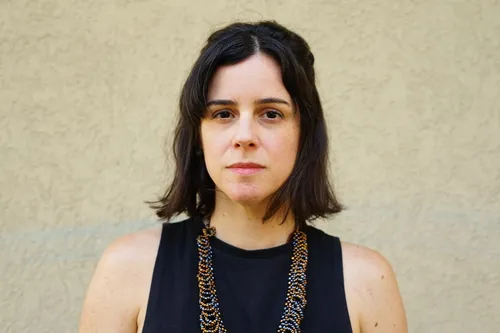
Photo: Chana da Moura
Nathalia Lavigne [she/her] works as a researcher, curator and writer. Post-doctoral fellow at MAC USP (Museo de Arte Contemporáneo de la Universidad de São Paulo), she has a PhD from FAUUSP (Faculdade de Arquitetura e Urbanismo da Universidade de São Paulo), and a master's degree in Critical Theory and Cultural Studies from Birkbeck, University of London. Her research interests involve topics such as social documentation and circulation of images on social networks. As a curator, she has organised exhibitions such as Against, Again: Art Under Attack in Brazil, Anya and Andrew Shiva Gallery (John Jay College, CUNY, NYC, 2020), and Tactics of Disappearance, Paço das Artes (São Paulo, 2021). She is currently a junior fellow at the Käte Hamburger Kolleg: Cultures of Research (c:o/re) at RWTH Aachen University in Aachen.
After Memory is a project by:
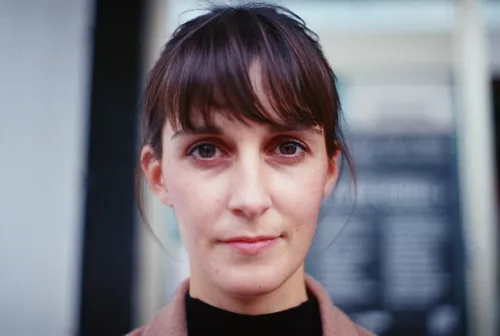
Photo: Álvaro Sardà
Lisa Deml [she/her] is an independent curator and writer based in Berlin. Initially trained as a journalist, she subsequently worked for public institutions and non-profit organisations, including Haus der Kulturen der Welt (HKW), Berlin; Haus der Kunst, Munich; and Ashkal Alwan, Beirut. Her texts have been featured in exhibition catalogues, such as Rabih Mroué: Interviews (ed. Nadim Samman, KW Institute for Contemporary Art / Hatje Cantz, 2022), as well as in journals, including Third Text, PARSE, and Critical Arts. From 2025, she will take up the co-directorship of the Halle für Kunst Lüneburg.
After Memory is a project by:
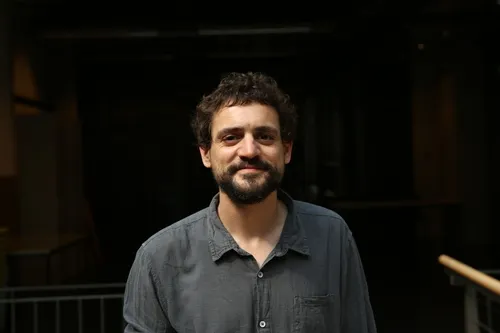
Photo: Max Clausen
Víctor Fancelli Capdevila [any] works in the project Atelier Digitale Souveränität and before was digital archivist at the Open Resource Centre (ORC) in Karlsruhe, the university archive of the Karlsruhe Institute of Technology (KIT) and the ZKM | Center for Art and Media Karlsruhe. He completed a master's degree in media philosophy and art history at the Karlsruhe University of Arts and Design and has since dedicated his research to the (political) relationships between people, technology, education, and shared memory. This is reflected in his contributions to various conferences on archiving and teaching as well as in digital literacy workshops. He is part of the organisational team of Sobtec, Congrés de Sobirania Tecnologica in Barcelona and is behind Keep Karlsruhe Boring.
International Exhibition
AFTER MEMORY
Echoes in the Future Perfect Tense
Kunstraum Kreuzberg, Berlin
July, 11th — October 11th, 2026
Opening: Friday, July 10th at 5 pm, with opening remarks at 7 pm
The exhibition begins with a grammatical proposition. Memory, by its very nature, exists only a posteriori. It draws what has passed and what is past into the present tense. Yet memory is as much an act of retrospection as it is of anticipation. It operates in the future perfect tense, asking not only what happened, but what will have had to be remembered—and, equally, what will have had to be forgotten.
Now more than ever, memory has become a contested terrain: it is appropriated by reactionary movements, capitalist corporations, and geopolitical interests. Digital technologies accelerate these contestations through the rapid circulation of disinformation, the extractive mechanisms of data colonialism, and the algorithmic narrowing of perspectives. Yet, at the same time, these technologies open up new forms of resistant remembrance and counteract imposed oblivion.
The group show unfolds along two interconnected axes: Loss and Latency. The axis of Loss addresses the pending or perpetual disappearance of memories. The works gathered here employ digital technologies and infrastructures to preserve endangered histories, construct alternative archives, and develop practices of proxy witnessing. They demonstrate how fragmented or marginalised narratives can endure despite displacement, destruction, and death. The axis of Latency follows the buried traces and lingering echoes of violent pasts that continue to haunt the present. The assembled works challenge the authority of established narratives and linear temporality by making absences, silenced voices, and suppressed histories present.
Throughout the exhibition, remembering and forgetting operate as interdependent processes—forgetting being imperative for remembering, and vice versa. This becomes all the more apparent in the digital condition. While unprecedented capacities for documenting and storing information give the illusion that everything can be recorded and retained, they raise a different challenge: not how to preserve everything, but how to cultivate meaningful forms of forgetting. Managing forgetfulness has become just as urgent as safeguarding remembrance itself.
Indeed, the present is marked by many uncertainties, including its temporal constitution. As practices of remembering and forgetting are shifting, mnemonic agency is redistributed from institutions to communities and individuals. What is kept in memory and what is left behind shape not only our relationship to the past and the present, but also the horizon of futures yet to come.
The exhibition brings together works by Noor Abuarafeh, Heba Y. Amin, Maria Thereza Alves, Aram Bartholl, Taysir Batniji, Giselle Beiguelman, Zach Blas, Karolina Grzywnowicz, Ana Hupe, Eduardo Kac, Aline Motta, Rabih Mroué, Vanessa Amoah Opoku & Joy Weinberger, and Federico Protto.
Kunstraum Kreuzberg / Bethanien
Mariannenplatz 2
10997 Berlin
U-Bahn Kottbusser Tor
Bus 140, M29
exhibition map
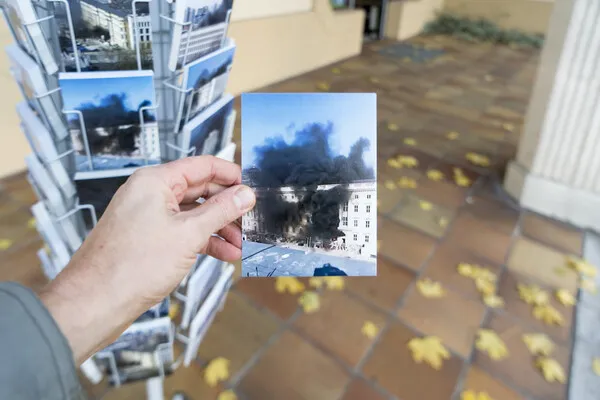
The work was originally conceived as a series of postcards featuring video stills of the Humboldt Forum in flames during its construction in April 2020. The artist highlights how the fire “added the first significant layer of authentic history to an otherwise historical reconstruction”—an event that could have marked “the commencement of transforming sterile veneers of a non-place into a site of local history.” Instead, the physical traces of the fire were erased, and many of the videos originally posted on old Twitter are probably difficult to find. Six years later, “Greetings from Berlin!” evokes both the controversies surrounding the opening of the Humboldt Forum and the recent transformations in the ways images circulating on social media are archived, recontextualized, or simply forgotten. NL
Aram Bartholl
Aram Bartholl uses sculptural interventions, installations, and performative workshops to question our engagement with media and with public economies linked to social networks, online platforms, and digital dissemination strategies. Bartholl has exhibited at MoMA Museum of Modern Art NY, Skulptur Projekte Münster, Palais de Tokyo, Hamburger Bahnhof, Seoul Museum of Art and the Thailand Biennale, among others.
Greetings from Berlin, 2020
Post card series, cards & stand
35 x 35 x 160 cm
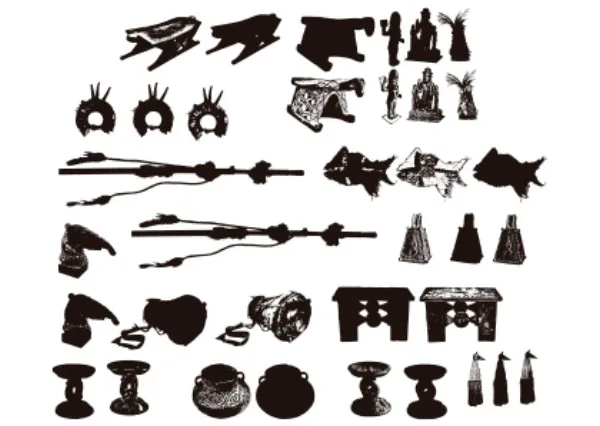
Ana Hupe, vectorised images for Dreaming Dashes–Transatlantic Crossroads, 2024. Courtesy of the artist
exhibition map
Among the objects depicted in the textiles of this installation is a late 19th-century throne that once belonged to King Gbéhanzin of present-day Benin and is now on permanent display at the Humboldt Forum. Arranged as if on a museum shelf, the objects represented here originate from Brazil and West Africa and are currently housed in ethnographic museum collections in Germany. Their images were printed onto cotton fabrics using the batik technique, evoking a cultural heritage shared by Benin and Nigeria. By materializing these objects on fabrics, the artist seeks to enable their circulation within local West African textile industries, allowing them to be reappropriated and used by the people—a process she describes as “a poetics of restitution.” NL
Ana Hupe
Ana Hupe (1983) is visual artist and Associate Researcher in Art History at Burg Giebichenstein Kunsthochschule Halle, Germany. Her projects address economic and social disparities and rewrite histories of resistance in installations with plural narratives, building counter-memories to colonial archives. In 2023 she published "Footnotes to triangular cartographies", by K Verlag, Berlin
Dreaming Dashes, 2024
Batik with Indigo dyeing and ambroidery, 8 cotton Fabrics, ca 150 x 80 cm each
Ethnography of the Ethnographers, 2024
Embroidery and charcoal stones on cotton fabric, 80 x 48 cm
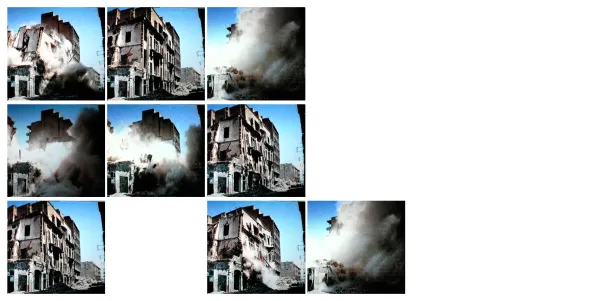
Rabih Mroué, Old House (videostill), 2006. Courtesy of the artist.
exhibition map
The short video shows the demolition of a residential building in the aftermath of the Lebanese Civil War. The footage plays forwards and backwards in a seemingly endless loop of ruin and resurrection. Contrary to the notion of linear progress, Mroué demonstrates that the irreversibility of collapse and the possibility of renewal are inextricably intertwined. As an ever-changing present continually emerges from the ruins of the past, remembering becomes just as essential for forging a future as forgetting. LD
Rabih Mroué
Old House, 2006
Video, Sound
1:36 (Loop)
Taysir Batniji, Remnants IV, 2024. Courtesy of the artist and Sfeir-Semler Gallery Beirut / Hamburg.
exhibition map
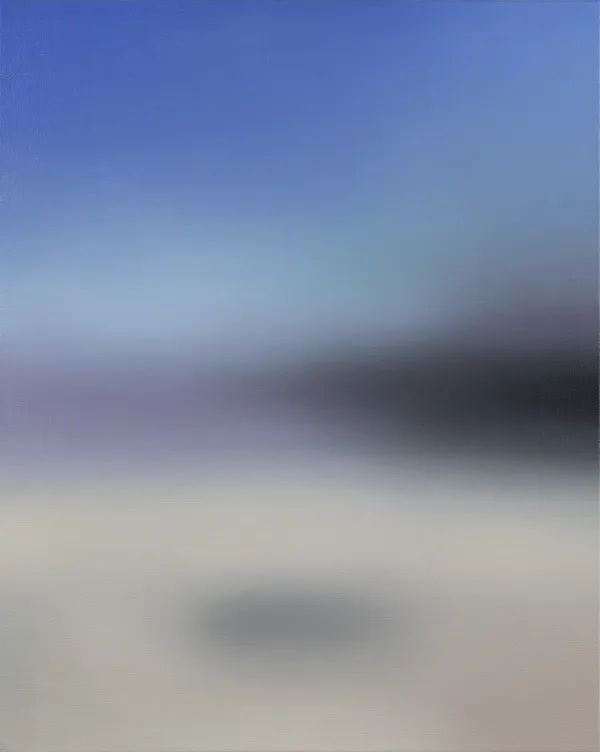
This ongoing series of paintings is being developed in response to the daily images of destruction that Batniji receives from his homeland of Gaza via digital messaging services. Internet connection is often slow and unstable, causing the transmitted photographs to linger in a state of blur before gradually taking shape on the screen of his mobile phone. The artist captures these fleeting instants through screenshots, whose hazy and pixelated materiality he subsequently translates into oil paintings. In doing so, he momentarily suspends time, creating a brief pause before the full extent of devastation is exposed. LD
Taysir Batniji
Remnants IV - V (Dypticon), 2024
Oil on canvas 41 X 33 cm each
Remnants XXIV, 2025
Oil on canvas, 70 x 50 cm
Remannts XXXI, 2026
Oil on canvas, 70 x 50 cm
Federico Protto, exterra (videostill), 2024. Courtesy of the artist.
exhibition map
In the video work exterra, Protto traces his own migration history from Uruguay to Germany—and back again. In doing so, he considers the Atlantic Ocean as a living archive that connects humans across continents and centuries. Here, identity emerges less from national allocation than from relational association—a notion embodied in the textile works Flags: 16, 18, and 19. They are composed of discarded work uniforms and cleaning cloths from his parents and become living testimonies of layered histories. Both works are part of the artistic research project MAPA, which outlines a relational practice of cartography. While maps have served as instruments of colonial appropriation, territorial control, and military expansion, Protto uses mapping to chart migration trajectories and to open up alternative forms of belonging. LD
Federico Protto
Federico Protto is an interdisciplinary artist whose practice spans performance, sound, installation, and research. Their work intertwines choreography, music, fashion, and their South American heritage, exploring themes of migration, colonialism, and cross-continental kinship. Federico weaves together myths, fiction, and ancestral notions, creating dynamic installations such as Dress-Rehearsals (2022) and the ongoing MAPA project. They have exhibited at institutions internationally, including DeSingel and MOMU (both in Antwerp) and Centro Cultural de España, Montevideo in Uruguay. Federico studied fashion design at the University of Applied Arts,Vienna and artistic research at a.pass, Brussels, where the artist is also based.
Exterra, 2024
Video, Sound, 10:11
Flags: 16, 18, and 19, 2024
Differe Different textiles (cotton, polyester, mixed), plastic, thread
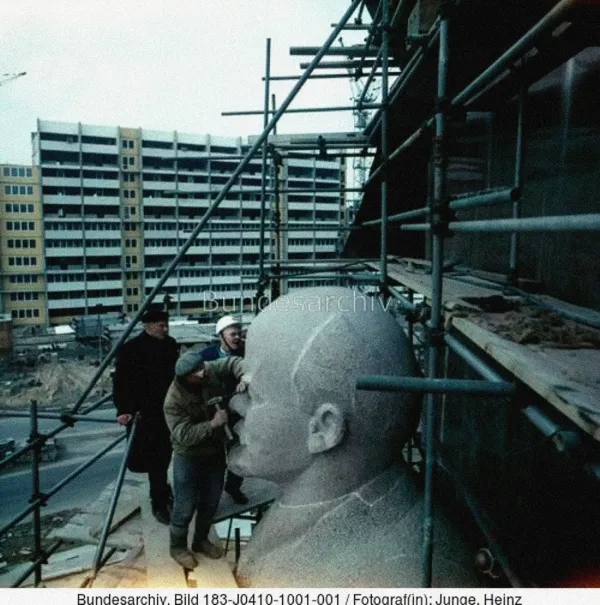
Building of Lenin’s statue in Berlin, 1970. Photo: Heinz Junge. Courtesy of the Bundesarchiv.
exhibition map
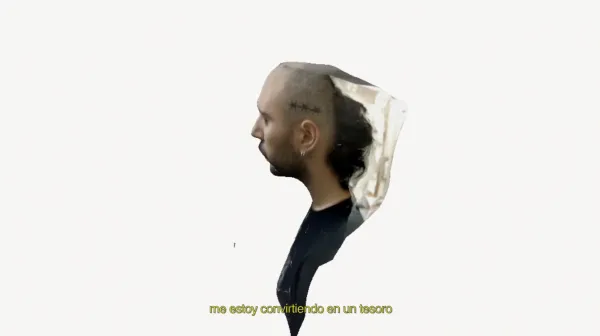
What did you forget to remember? What did you remember to forget? With these questions, Beiguelman highlights the interdependence between these two processes—forgetting as an imperative for remembering and vice-versa. In her new video essay, the artist reflects on the state of memory today, between the ruins of modernity and the algorithmic reconstruction of the past by artificial intelligence. Through images of contested monuments, nomadic statues, digital archives, social media feeds, and synthetic faces, the work explores how memory is shaped by systems that simultaneously preserve and erase. From the displacement of monuments in São Paulo to the dismantling of Lenin’s statue in Berlin, the video asks what remains when history is dissolved into fragmented data, manufactured images and speculative prediction. Rather than seeking to restore a lost totality, she proposes a “museum of losses”: a space for the unfinished, the unrepaired, and the unrecovered. NL
Giselle Beiguelman
Giselle Beiguelman is an artist and Full Professor at the Faculty of Architecture, Urbanism and Design of the University of São Paulo (USP). She is the author of Políticas da Imagem: Vigilância e Resistência na Dadosfera (Image Politics: Surveillance and Resistance in the Datasphere, Ubu, 2021), and Technologies of Invention (Autêntica, forthcoming), among other publications.
Museum of Losses for Clouds of Oblivion, 2026
Video, Sound, 4:16
Heba Y. Amin, Project Speak2Tweet / I’m the Son of the Nile (videostill), 2013. Courtesy of the artist.
exhibition map
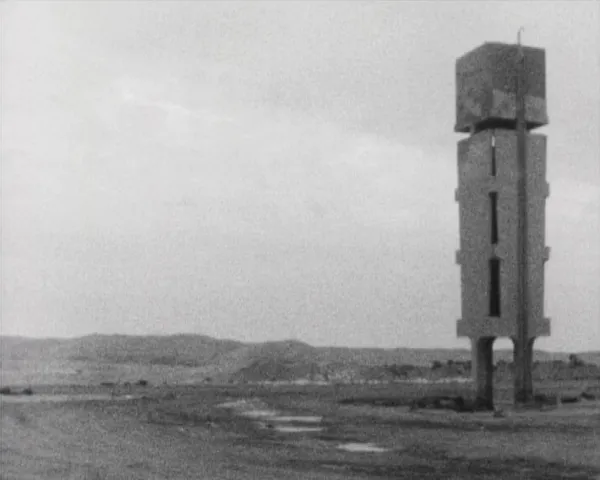
On 27 January 2011, the Egyptian authorities shut down internet access across the country in an attempt to suppress the growing protests. In response, programmers developed the digital platform Speak2Tweet, which allowed Egyptians to leave voice messages via a landline telephone that were then automatically posted to Twitter. Amin brings these audio recordings together with film footage of abandoned infrastructures and failed real estate developments around Cairo. These sites bear witness to the material legacies of political failure and are haunted by memories of the revolution. LD
Heba Y. Amin
Project Speak2Tweet, 2011-ongoing
9-channel B/W video and sound installation
Aline Motta, Water is a Time Machine #9 (digital photograph), 2023. Courtesy of the artist.
exhibition map
In the multilayered project A Água é uma máquina do tempo, Aline Motta intertwines the many stories of her family's past, whether real or imagined. Drawing on her mother's personal documents, the artist recounts her family's life in Rio de Janeiro at the beginning of the twentieth century, a period of political unrest that followed the abolition of slavery. Taking the form of a novel, a video, and a performance, the project traces the fault lines between historical records and intimate memories, weaving them together in a non-linear narrative that extends into the present day. Excerpts from her mother's diary, discovered shortly after her death, are incorporated into a narrative that draws on the literary genre of speculative fiction. That voice—previously unknown to the family—is echoed thirty years later in her daughter's voice, acquiring new meanings in the present. NL
Aline Motta
Aline Motta is a Brazilian visual artist, filmmaker, and writer. Through film, photography, installation, performance, and literature, she explores memory, family archives, water, and Afro-Atlantic histories. She has exhibited extensively in Brazil and internationally at major museums, biennials, and cultural institutions, developing research-based works that connect personal narratives with broader historical processes.
Water is a Time Machine, 2023
Video, Sound, 31:48
Eduardo Kac, Adsum, 2019. Courtesy of the artist.
exhibition map
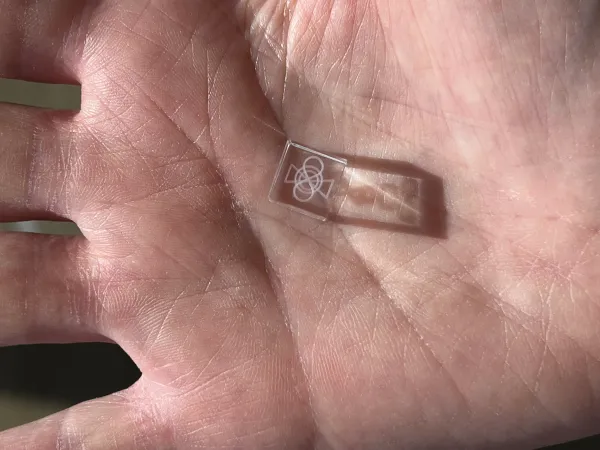
“Adsum is on the Moon!” Eduardo Kac wrote to me on 2 March, 2025. His message included a photograph of the Blue Ghost lunar lander, part of a NASA-funded mission by Firefly Aerospace, resting on the lunar surface with Earth rising in the background. The work marks the culmination of a five-phase project initiated in 2019 with the conception of a small glass cube engraved with four laser-etched symbols visible from different angles: an hourglass and the infinity sign, representing time on human and cosmic scales, and two circles representing Earth and the Moon. The title Adsum means “I am present” in Latin. Kac describes his space artworks as an “anticipatory space archaeology.” Addressing observers in the future, this work anticipates its own discovery—should it ever be found. NL
Eduardo Kac
Giselle Beiguelman is an artist and Full Professor at the Faculty of Architecture, Urbanism and Design of the University of São Paulo (USP). She is the author of Políticas da Imagem: Vigilância e Resistência na Dadosfera (Image Politics: Surveillance and Resistance in the Datasphere, Ubu, 2021), and Technologies of Invention (Autêntica, forthcoming), among other publications.
Adsum, 2019
2 laser-engraved cubic glass sculptures
1 x 1 x 1 cm & 10 x 10 x 10 cm
Zach Blas, Jubilee 2033 from Contra-Internet (film still), 2018. Courtesy of the artist.
exhibition map
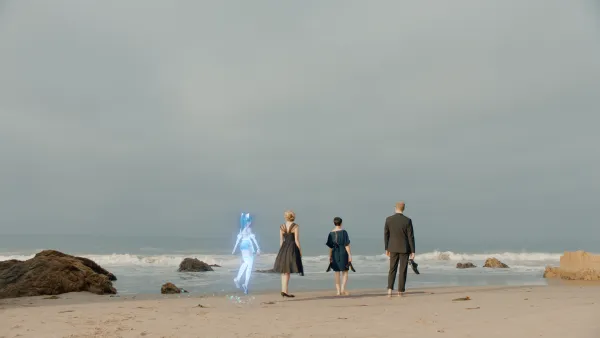
Drawing on queer and feminist strategies of speculation, Contra-Internet traces the transformation of the internet from a space of emancipatory possibility into an instrument of surveillance, state power, and accelerated capitalism. Its cinematic centrepiece, Jubilee 2033, follows philosopher Ayn Rand and her Collective on an acid trip and transports them to a dystopian Silicon Valley of the future. Guided by the artificial intelligence Azuma, they encounter the internet they helped ideologically shape and witness the collapse of its techno-libertarian world. Considering the internet from the perspective of its own aftermath, Blas reveals digital infrastructures not as inevitable technologies, but as contingent political fictions that can also be imagined otherwise. LD
Zach Blas
Jubilee 2033 from Contra-Internet, 2017-2018
HD Video, Sound, 30:52
2 etched glass spheres, 25 × 25 × 132 cm
Fluorescent vinyl (variable dimensions)
Vanessa Amoah Opoku & Joy Weinberger, Bricks and Cement Don’t Make a Home (detail), 2024. Photo: Roxana Rios. Courtesy of the artists and Sammlung Haus Coburg | Städtische Galerie Delmenhorst.
exhibition map
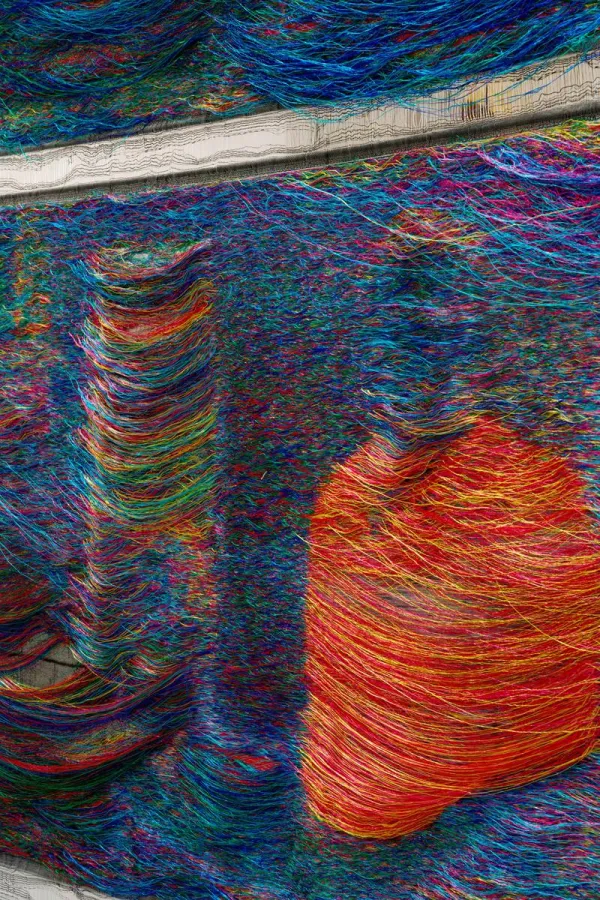
The installation takes the unfinished house of Vanessa Amoah Opoku’s family in Ghana as its point of departure. Long envisioned as a place of return, it embodies both hopes for a better future and the traces of deferred dreams. Using smartphone LiDAR scanning—a tool historically used for territorial mapping and resource extraction—Opoku captures digital fragments of interrupted construction sites across the country. The resulting point clouds are then translated by Joy Weinberger into woven textiles that become tactile mediators between virtual and physical worlds. Together with twenty steel reinforcement bars, the installation evokes the floorplan of Opoku’s grandfather’s unfinished house and imagines the foundation for a shared home. Reclaiming technology as a medium for diasporic belonging, the installation explores how bonds to home are sustained across time and distance, even when land itself has been expropriated by colonial and neo-colonial systems. LD
Vanessa Amoah Opoku & Joy Weinberger
Bricks and Cement Don’t Make a Home, 2024
Multimedia installation, textile, steel, video, sound, 22:59 (variable dimensions)
Maria Thereza Alves, On the Need of Remembering Here before the Onslaught of There Began, 2022. Photo: Nick Ash. Courtesy of the artist and Michel Rein Gallery.
exhibition map
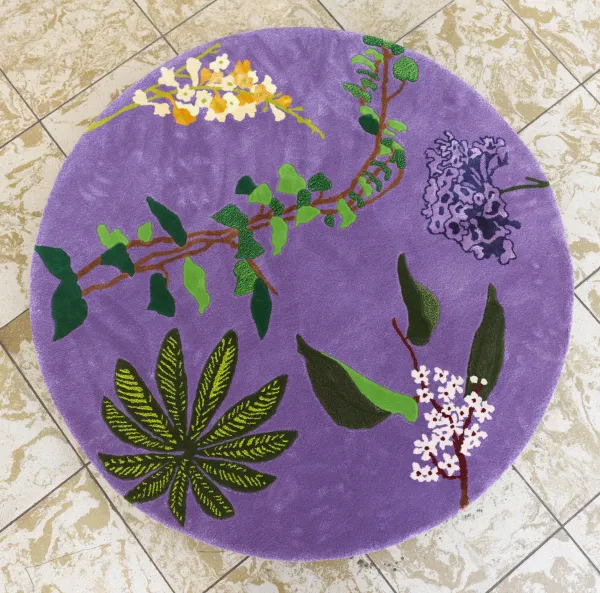
Commissioned for documenta fifteen (2022), this carpet was realised as part of the collective Jimmie Durham & A Stick in the Forest by the Side of the Road, formed after Jimmie Durham’s death in 2021. It belongs to Alves’s ongoing research into the entangled histories of plants, colonialisation, and displacement, giving voice to stories that have long been silenced. Its circular form evokes a space of gathering and contemplating what surrounds us. The depicted plants are all native to the Atlantic Forest surrounding Ubatuba, Alves’s hometown in Brazil: jequitibá, guapuruvu, ipê-roxo, embaúba, and the vine ysypó (also known as ysypó marilombre, ysypó mil hombres, or Aristolochia triangularis). The latter is widely used in South America for its therapeutic properties, including the preparation of teas believed to aid remembrance. NL
Maria Thereza Alves
Maria Thereza Alves has participated in major international exhibits, including documenta fifteen and 13, and biennales: Sydney, Toronto, Sharjah, São Paulo, Lagos, Helsinki, and Klimate Biennale Vienna. Recipient of Vera List Prize for Art and Politics (2016–2018). Recent books include Seeds of Change (2023) and Thieves and Murderers in Naples (2020).
On Remembering for a Future, 2022
Wool and tencel, ⌀ 160 cm
Karolina Grzywnowicz, Walking through Underwater Meadows, 2024. Photo: Zosia Paśnik. Courtesy of the artist
exhibition map
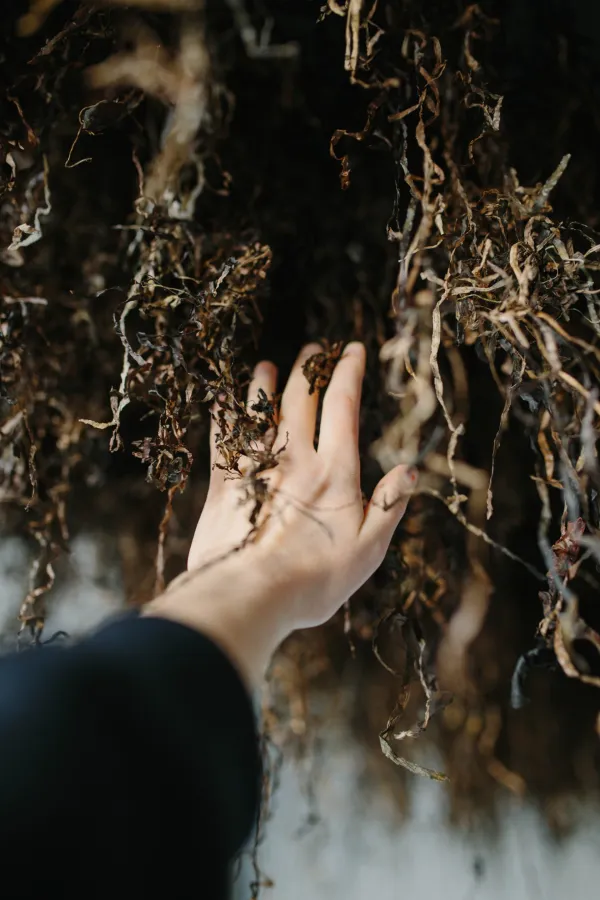
The olfactory installation was developed in response to a personal experience of loss, transforming individual grief into a space of collective remembrance. Following the death of a close friend, Grzywnowicz turned to funerary traditions from Eastern Europe and the Baltic region, where the absence of the deceased is marked through plants, and mourning is sustained by communal practices of weaving, tying, and knotting. Therein, seagrass plays a central role. Long valued for its calming properties, it has been used therapeutically, including as filling for hospital mattresses, where body heat released essential oils believed to soothe patients and ease them into sleep. At the same time, seagrass is one of the most important carbon sinks in marine ecosystems, yet is itself increasingly threatened by climate change. The artist thus understands seagrass as a living archive of disappearance, whose materiality embodies both the labour of remembering and the impossibility of ever fully reconciling oneself with the loss of a loved one. LD
Karolina Grzywnowicz
Walking through Underwater Meadows, 2024
Olfactory installation with seagrass (variable dimensions)
Noor Abuarafeh, production still from Observational Desire on a Memory That Remains, 2014. Courtesy of the artist
exhibition map
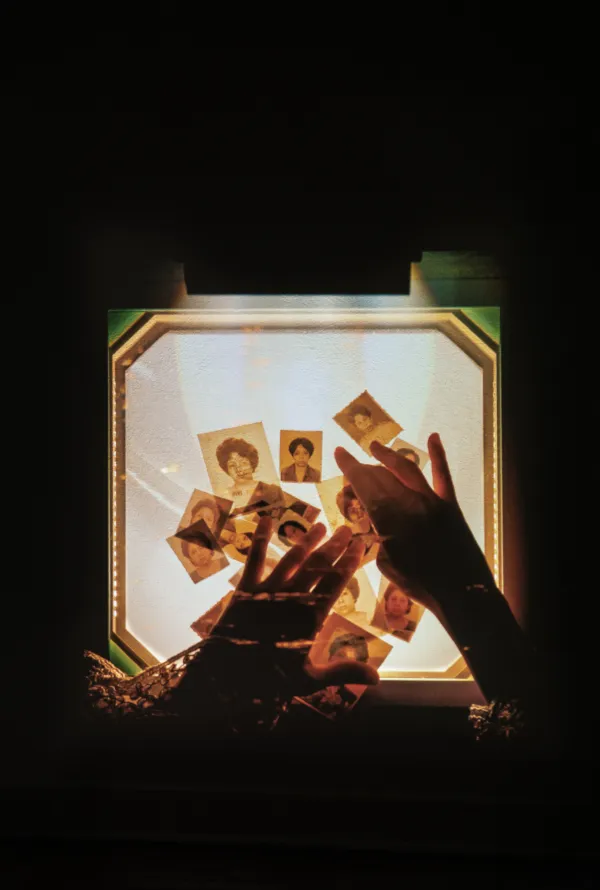
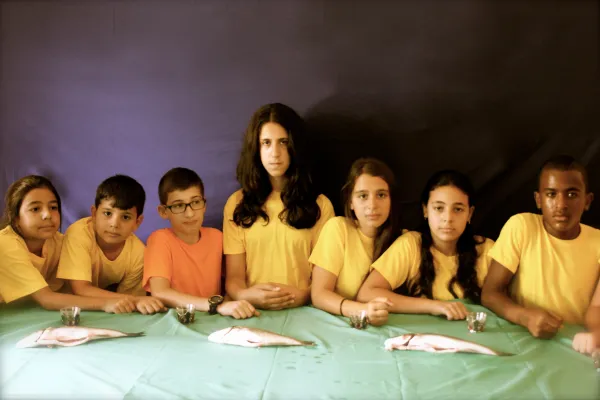
Both videos revolve around a group exhibition by Palestinian artists held at Jerusalem's Al-Hakawati Theatre in 1985. In the absence of an institutional archive of Palestinian art, Abuarafeh draws on oral histories, interviews with witnesses, workshops, and other collective practices to reconstruct its narrative. Based on a single group photograph, both videos analyse the image through digital methods, examining what it reveals about the past—and what it conceals. In doing so, the works reflect Abuarafeh’s interest in the often corrupt dynamics of historiography and the hierarchies of testimony. Taken together, the two videos demonstrate how past events can be transmitted through immaterial memories, suggesting that collective memory itself can become the bearer of an imagined archive. LD
Noor Abuarafeh
The Magic of the Photo That Remembers How to Forget, 2016
Video, Sound, 7:11
Observational Desire on a Memory That Remains, 2014
Video, Sound, 15:12
After Memory: Recalling and Foretelling Across Time, Space, and Networks Key Visual. Design: Jan Motyka
exhibition map
The project After Memory emerged from a discussion at the 2nd Summit on New Media Art Archiving in Barcelona in 2022, which explored how digital technologies are reshaping practices of remembering and forgetting. In the years that followed, this exchange continued through seminars, workshops, and public events, culminating in the international symposium After Memory: Recalling and Foretelling Across Time, Space, and Networks at ZKM | Center for Art and Media Karlsruhe and the Karlsruhe University of Arts and Design in 2024. Artists, scholars, curators, archivists, and activists came together to discuss the spatial, temporal, and social dimensions of digital memory, developing new perspectives on archival infrastructures and collective forms of remembrance. The research materials and references gathered here have accompanied and informed the project over the past four years and invite to reflect together on the future of remembering and forgetting. VFC
After Memory
Research Material, 2022-2026
Books & videos from the symposium
Graphic design by
Jan Motyka
Team Kunstraum Kreuzberg/Bethanien:
Director Kunstraum Kreuzberg/Bethanien
Stéphane Bauer
Programme Coordinator
Sofía Pfister
Production Coordinator
Ignacio Rivas
Project Support
Carlotta Gonindard Liebe, Dani Hasrouni, Frances Breden, Hassan Elmalik, Sarah Schurian, Tara Čikara
Exhibition Installation
Dušan Rodić, Kornel Igorbuharov, Mark Stroemich, Yasmin Nebenführ
Gallery Supervision
Antonia Döß, Eva Sartor, Johanna Böker, Jule Wermerßen, Lara Jablonski, Polina Piddubna
Kunstraum Kreuzberg/Bethanien is an organisation of the Friedrichshain-Kreuzberg District Council.



International Symposium
AFTER MEMORY
Recalling and Foretelling
Across Time, Space, and Networks
ZKM | Center for Art and Media Karlsruhe & Karlsruhe University of Arts and Design
23–26 October 2024
The project AFTER MEMORY begins with a symposium that brings together key figures from the fields of art, science, technology, museology, and activism. It aims to initiate an open process of experimentation and imagination and to form a sustainable network for exchanging and developing ideas in collaborative ways. The programme unfolds along three lines of enquiry that consider the spatial, temporal, and social dimensions of digital memory.
Programme
Wed, 23 Oct
Thu, 24 Oct
Fri, 25 Oct
Sat, 26 Oct
10–12
Lunch Break
14–15
15:30–17
Dinner Break
19–22
Dirt, Debt, Death, Data
Back toprogramm
Oil, the 20th century’s most important non-renewable resource, lies at the centre of discourses on ecological peril and financial oppression, though its colonialist history has faded from view. In a lecture performance enacting a liquidation of recent Mideast history, speculative exploration, and extractive economics, the artist—acting on behalf of Oil Research Group (ORG), a one-woman collective—is propelled by the concept that ‘data is the new oil’, coined in 2006 by British mathematician (and customer loyalty card inventor) Clive Humby. Oil is a finite source at the very core of both global financial markets and #nofuture petroleum wars; information, seemingly infinite, also ‘leaks’ into the collapsing tripartite structures of governance, markets, and society. The digital self is sticky, like a bird after an oil spill. Moving along the axis of four Ds: dirt, debt, death, and data, ORG traces the finitude and preciousness of dominant technologies, along the way testing assumptions about the material and immaterial ways in which we are connected, addicted, fossilised, and, one hopes, liberated in their wake.
Wed, 23 Oct, 19 - 22
Medialounge, ZKM
Maryam Monalisa Gharavi
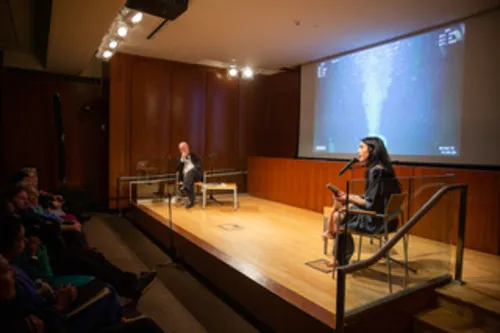
Maryam Monalisa Gharavi is an artist, poet, and technologist. Her book Bio (Inventory Press, 2018) was the first to be written on a social media platform while bypassing “big data” storage sites. Other books include The Distancing Effect (BlazeVOX, 2016), Secret Catalan Poem (The Elephants, 2018), and the co-authored Oil News 1989-2020 (Sonic Acts Press, 2022). Exhibitions of her work include Sonic Acts, Amsterdam; Nottingham Contemporary, Nottingham; New Museum, New York City; Serpentine Cinema, London; Paço das Artes, São Paulo; and Recess, New York City, among others. She is the founder of Oil Research Group (ORG), a one-woman collective investigating oil and data. ORG was awarded an Anonymous Was a Woman Environmental Art Grant in 2023. She lives and works in New York City.
MAPA *migración, ancestral, parentesco, activación - On Home/ing
Back toprogramm
What does “home” mean? What does this notion contain, physically, somatically, and emotionally? And how is it contained within our bodies, moving across geographies and generations? What does it mean “to home”? And who are we homing and being homed by? In this workshop, we will consider “home” as both a noun and a verb. Along a sensorial journey guided by Federico Protto, we will retrace the lingering resonances of home/s and how they are inscribed in our bodily memory. Together with Lisa Deml, we will engage in a collective reading and writing practice to address home, to invite it into the space and time of the workshop, and to share it with other participants. The workshop leans on Federico Protto’s long-term artistic research project MAPA which explores migration experiences and transgenerational trajectories to discover new ways for cross-continental connections and to activate empathy in a constant state of being “the Other”. Originally, the word “mapa” referred to the textile surfaces on which maps were painted in military contexts. In the context of MAPA, cartography becomes a transformative medium, challenging colonial narratives and hegemonic geographies and embracing an open and dynamic approach to mapping.
Thu, 24 Oct, 10 - 12 h
Pavilion
Federico Protto
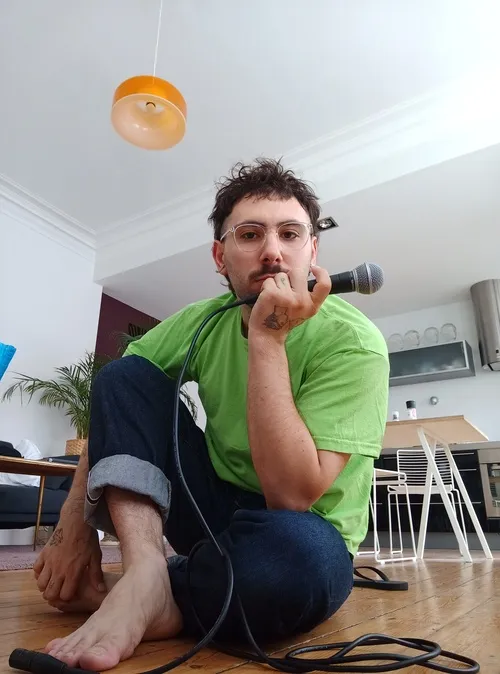
Federico Protto is an interdisciplinary artist whose practice spans performance, sound, installation, and research. Their work intertwines choreography, music, fashion, and their South American heritage, exploring themes of migration, colonialism, and cross-continental kinship. Federico weaves together myths, fiction, and ancestral notions, creating dynamic installations such as Dress-Rehearsals (2022) and the ongoing MAPA project. They have exhibited at institutions internationally, including DeSingel and MOMU (both in Antwerp) and Centro Cultural de España, Montevideo in Uruguay. Federico studied fashion design at the University of Applied Arts,Vienna and artistic research at a.pass, Brussels, where the artist is also based.
Lisa Deml
Lisa Deml [she/her] is an independent curator and writer based in Berlin. Initially trained as a journalist, she subsequently worked for public institutions and non-profit organisations, including Haus der Kulturen der Welt (HKW), Berlin; Haus der Kunst, Munich; and Ashkal Alwan, Beirut. Her texts have been featured in exhibition catalogues, such as Rabih Mroué: Interviews (ed. Nadim Samman, KW Institute for Contemporary Art / Hatje Cantz, 2022), as well as in journals, including Third Text, PARSE, and Critical Arts. From 2025, she will take up the co-directorship of the Halle für Kunst Lüneburg together with Marie-Sophie Dorsch
Living Open Archive
Back toprogramm
Since its inception in 2007, ECCHR has generated a tremendous amount of knowledge in the field of strategic human rights litigation. Whether stemming from legal casework or from critical reflections upon it, the material that ECCHR has amassed spans a wide array of geographical regions and topics and includes a variety of actors and networks from transnational human rights work. While ECCHR´s legal casework addresses specific human rights violations in various contexts, it often also reveals connections between different forms of injustice. With the project Living Open Archive, ECCHR aims to identify such connections and make them visible using a variety of media formats and narrative techniques. By illuminating the broader political and historical context of ECCHR’s work, it provides a resource for developing new legal approaches and informed strategic interventions in the changing social and political landscape of human rights work.
Thu, 24 Oct, 14 - 15 h
Useum (ZKM)
Elisabeth Krämer
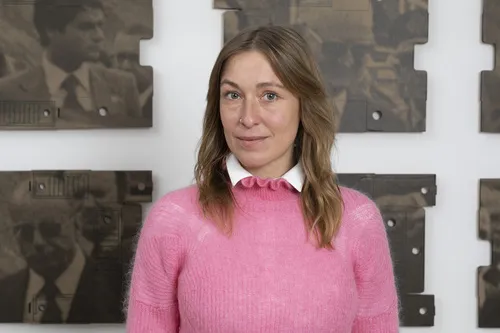
Elisabeth Krämer studied art history, music, and media studies and worked on various projects, including based in Berlin and documenta(13). During the past years, she has primarily worked at Haus der Kulturen der Welt (HKW), where she coordinated various exhibitions, conferences and publications, such as Past Disquiet and 2 or 3 Tigers. Her recent projects include the collective learning and artistic research platform New Alphabet School and the community of practice Investigative Commons. She joined ECCHR in February 2024 as the project coordinator of the Living Open Archive and is responsible for the Activism & Arts program.
Unmapping Landscapes: Of Ruins and Repositories
Back toprogramm
Moderated by Lisa Deml
The first roundtable explores how memories are inscribed in datafied landscapes and across networked cartographies. Contesting the notion of the digital as a “terra nullius,” artists and researchers Giselle Beiguelman, Ofri Cnaani, Thiago Costa-Leiros, and Pedro Oliveira retrace the ways in which colonial systems, national identities, and extractivist economies are carved into virtual topographies. Through their respective practices, ranging from media archaeology, ethnomusicology, transmedial performances, and anticolonial studies of listening, they investigate the correlations between geographical and computational territories and the different agencies and ideologies that seek to claim them. Considering the mnemonic nature of platformed landscapes, this roundtable seeks to uncover buried histories, to gather scattered testimonies, and to activate ruins as repositories for multiple histories, both real and imagined ones.
Thu, 24 Oct, 15:30 - 17 h
Useum (ZKM)
Giselle Beiguelman
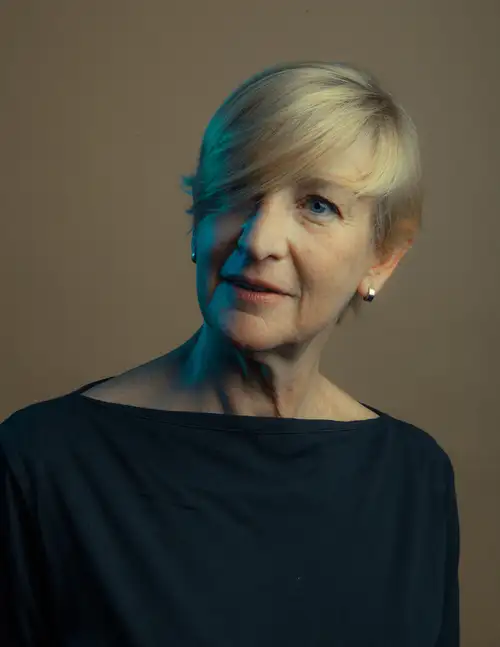
Giselle Beiguelman is an artist and a professor at FAU-USP. She is the author of Políticas da imagem: vigilância e resistência na dadosfera (UBU Editora, 2021) and Memória da amnésia: políticas do esquecimento (Edições Sesc, 2019), among others. Her artistic works are part of museum collections in Brazil and abroad, including ZKM, Karlsruhe, the Jewish Museum Berlin, MAC-USP, São Paulo, and the Pinacoteca de São Paulo. In her recent projects, she investigates the construction of the colonialist imaginary in arts and sciences using artificial intelligence resources.
Ofri Cnaani
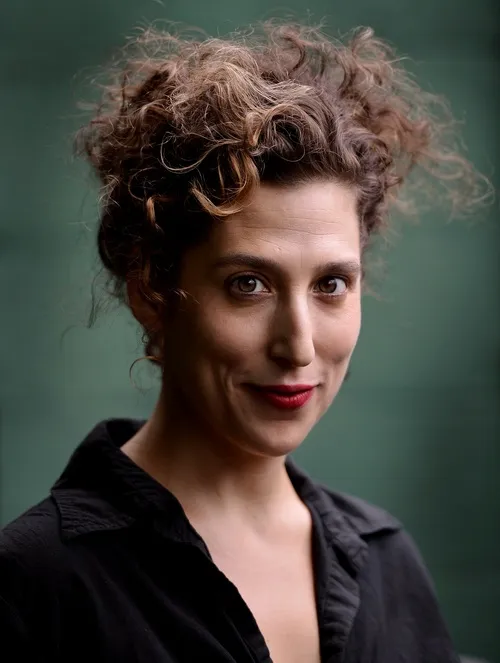
Ofri Cnaani is an artist and researcher who works across performance and media. Cnaani’s work has been exhibited internationally at institutions such as the Metropolitan Museum, New York City; Venice Architecture Biennale; PS1 MoMA, New York City; Tate Britain, London; BMW Guggenheim Lab, New York City; Amos Rex Museum, Helsinki; Kunsthalle Wien, Vienna; and Kiasma Museum, Helsinki, among others. She holds a PhD from the Visual Cultures department at Goldsmiths, University of London, where she also served as an associate lecturer. Currently, she is a visiting scholar at the Institute of Visual Culture, TU Wien, and a research fellow at the Amsterdam School for Cultural Analysis (ASCA) at the University of Amsterdam.
Thiago Leiros-Costa
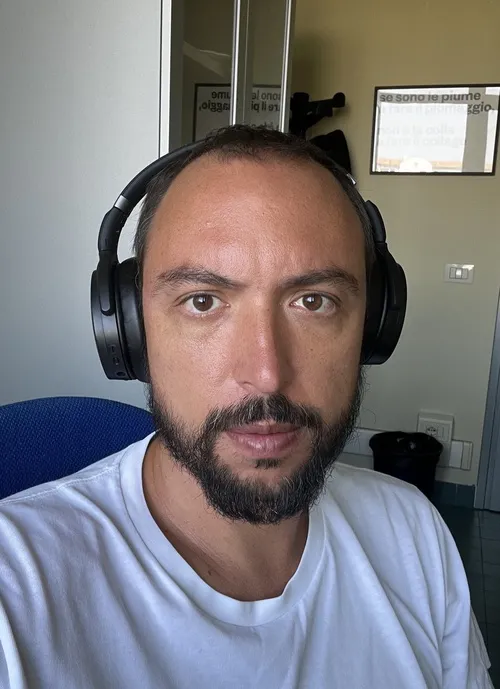
Thiago Leiros-Costa is an artist, psychologist, neuroscientist and educator. Born in the northeast coast of Brazil, he has been performing live since 1998. He currently works as a researcher and professor at the Politecnico di Milano, Milano-Bicocca and Verona Universities, studying attention, perception and the psychology of art. As a musician he uses voice, stringed instruments (classical or prepared) and electronics, exploring concepts around Latin American folk, American ancestral guitar, free improvisation, sound design and Pauline Oliveros’ Deep Listening. His current aim as an educator and performer is to seamlessly merge scientific and artistic practices and to encourage a critical look at normative institutional practices
Pedro Oliveira
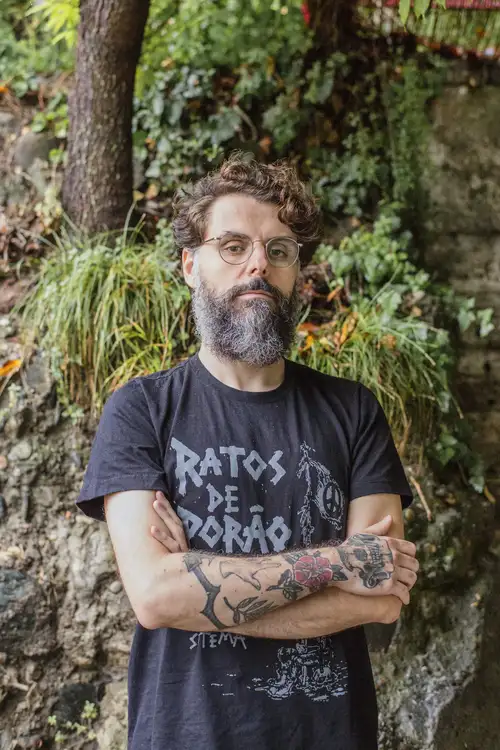
Pedro Oliveira is a researcher and sound artist whose work is committed to an anticolonial study of listening and its material intersections with the violences of the European border. His work was exhibited and performed at the Akademie der Künste, Berlin; Send + Receive Festival, Winnipeg; CTM Festival, Berlin; Festival Novas Frequências, and Akademie Schloss Solitude, Stuttgart, among others. He held fellowships at the Leuphana Institute for Advanced Studies, the Helsinki Collegium for Advanced Studies, and taught at the Humboldt University Berlin and Heinrich-Heine University Düsseldorf. Currently he is a guest faculty in Sound Studies and Sonic Arts at the Universität der Künste Berlin.
Film Screening
Back toprogramm
Domingo no Golpe (Sunday at the Coup d’État)
Giselle Beiguelman and Lucas Bambozzi. Brazil, 2024, 22’43”
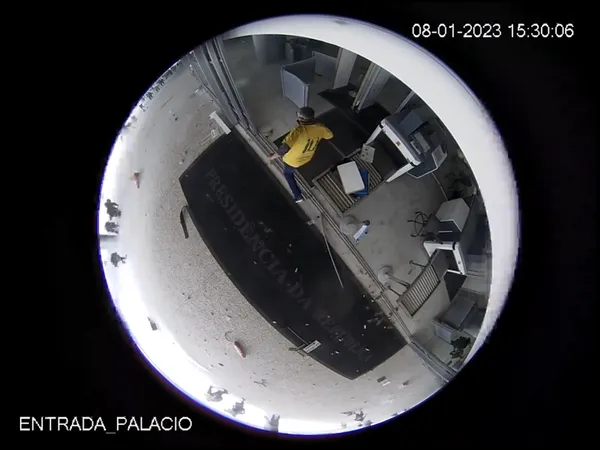
Domingo no Golpe (Sunday at the Coup d’État) [Brasil, 2024] is a “ready media” documentary about the attempted coup d’état that took place on 8 January, 2023, in Brazil. The term “ready media” refers to works in which the producers focus on existing materials rather than creating new material. This is the case with this documentary, which was produced entirely using footage from the security cameras of the Palácio do Planalto (the official workplace of the President of Brazil in Brasília). These surveillance images were made available to the press by the GSI (Institutional Security Office) by order of the Federal Supreme Court (STF) in April 2023. The narration is based on excerpts from the final report of the Parliamentary Investigation into the Acts of 8 January, released on 17 October, 2023, and read by Senator Eliziane Gama (the rapporteur). Domingo no Golpe (Sunday at the Coup d’État) addresses an 8 January that did not begin just a year ago and, as the rapporteur’s statement suggests, has yet to end - a statement that serves as a guiding thread throughout the narrative. An initial cut of the documentary was made publicly available online on 8 January, 2024.
Acapulco
Bruno Moreschi Directed by Bruno Moreschi and Pedro Gallego, Switzerland, 2023-2024, 114’
Employing methodologies rooted in critical pedagogy, Bruno Moreschi crafted an immersive experience for the “seers” who participate in this film. Leading experts from around the world received printed postcards by mail featuring some images used to train IA / Computer Vision, while crowd workers who tag these images participated in several experimental reading and conversation sessions. The culmination is a visual odyssey that invites speculation on novel approaches to image comprehension, advocating for a paradigm shift in computer training methods towards more nuanced, human-centric perspectives.
Thu, 24 Oct, 19 - 22 h
HfG
Giselle Beiguelman
Giselle Beiguelman is an artist and a professor at FAU-USP. She is the author of Políticas da imagem: vigilância e resistência na dadosfera (UBU Editora, 2021) and Memória da amnésia: políticas do esquecimento (Edições Sesc, 2019), among others. Her artistic works are part of museum collections in Brazil and abroad, including ZKM, Karlsruhe, the Jewish Museum Berlin, MAC-USP, São Paulo, and the Pinacoteca de São Paulo. In her recent projects, she investigates the construction of the colonialist imaginary in arts and sciences using artificial intelligence resources.
Bruno Moreschi
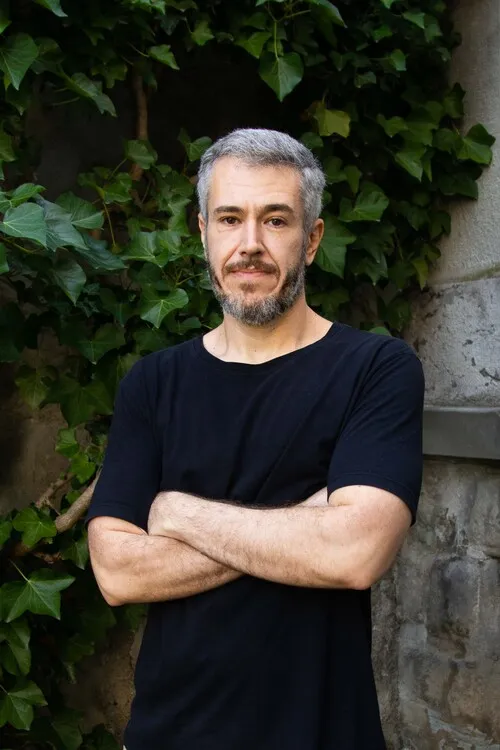
Bruno Moreschi is a researcher and artist. He holds a PhD in Arts from the State University of Campinas (Unicamp) with a period of study at Uniarts Helsinki. His investigations are related to the deconstruction of systems and the decoding of procedures and social practices in the fields of the arts, museums, visual culture and technology. Since 2023, he has been a fellow conducting research at LIAS – Leuphana University Institute for Advanced Studies. His projects have been recognised with grants and exhibitions, such as ZKM | Center for Art and Media, Karlsruhe, Van Abbemuseum, Eindhoven, Collegium Helveticum, Zurich, 33rd Bienal de Arte de São Paulo, Rumos Itau Cultural, Funarte, and the Bauhaus Fellowship.
A Historical Memory for the Digital Overload?
Back toprogramm
The widely perceived feeling of overload that comes with the digital attention economy has led not only to feelings of anxiety, exhaustion and lethargy caused by excessive screen time, but also to a diminished collective and intimate capacity to perceive, process, or simply select relevant instances from the past. As the fantasy of infinite storage space has led to 90% of the information ecocidally held in remote data centres being unused, a shift towards a more sustainable digital memory model is urgently needed. Nevertheless, digital trends have delegated the task of (promoting) the memorable to big tech platforms, which algorithmically dispossess and commodify the once humble techniques of memory. Looking at the pervasive presentism through a historical lens, this workshop invites participants to become ex-users, interrogating and breaking with a memory model that has forgotten that remembrance requires a patient and performative participation of the collective body. At the intersection of artistic knowledge and archival expertise, it seeks to alter the extractivist nature of digital data in favour of their transformation into cultural heritage.
Friday, 24 October 10:00 - 12:00
Pavilion
Paula Pérez‑Roda
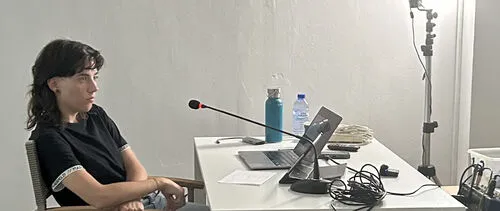
Paula Pérez-Roda is a researcher, editor, and artist. A current Postdoctoral Fellow in the Madrid Institute for Advances Studies, they have been an Artistic Research Fellow at Hangar (IX Fundaciò Banc Sabadell-Hangar Fellowship) with the project Formas de matar el mundo, which studies the cultural history of writing at social networks. Their research explores the technological order of verbal and textual arts and collective creative practices, touching on research areas like Cultural History, Literary Theory, Book History and the intersection of literacy, media, writing and the arts. They hold a Ph.D. in cultural and literary studies from Princeton University (2023), and have participated in artistic programs and exhibitions at Matadero-Madrid, Santa Mònica Museum, La Capella, Lugaradudas or La Madraza, among other institutions.
Víctor Fancelli Capdevila
Víctor Fancelli Capdevila works as a digital archivist at the Open Resource Centre (ORC) in Karlsruhe. Originally, he worked in the field of website development and maintenance before gaining work experience at the university archive of the Karlsruhe Institute of Technology (KIT) and the ZKM | Center for Art and Media Karlsruhe. He completed a master's degree in media philosophy and art history at the Karlsruhe University of Arts and Design and has since dedicated his research to the (political) relationships between people, technology, education, and shared memory. This is reflected in his contributions to various conferences on archiving and teaching as well as in digital literacy workshops for NGOs as part of the EU3Digital project. He is part of the organisational team of Sobtec Congrés Sobirania Tecnologica in Barcelona.
Studies of Air and Smoke
Back toprogramm
The talk and live music-led meditation session draws on sound design, psychology, neuroscience, folklore and diasporic spirituality. Studies of Air and Smoke is both an art performance and a meta-educational intervention; it is neither a concert nor a lecture. Thiago Leiros-Costa explores the dualism between being an artist and a scientist, performing both roles in the same evening and exploring their connections. The first part of the session assesses the nature of attention and awareness, and how the brain and our expectations are vital in constructing our experience of the world around us. Participants are invited to approach the second part, a musical performance, as a meditation session. Prompts and triggers given during the talk will be explored in the course of the performance. The music will range from folk to free improvisation and sound design.
Fri, 25 Oct, 14 - 15 h
Media Theater (ZKM)
Thiago Leiros-Costa
Thiago Leiros-Costa is an artist, psychologist, neuroscientist and educator. Born in the northeast coast of Brazil, he has been performing live since 1998. He currently works as a researcher and professor at the Politecnico di Milano, Milano-Bicocca and Verona Universities, studying attention, perception and the psychology of art. As a musician he uses voice, stringed instruments (classical or prepared) and electronics, exploring concepts around Latin American folk, American ancestral guitar, free improvisation, sound design and Pauline Oliveros’ Deep Listening. His current aim as an educator and performer is to seamlessly merge scientific and artistic practices and to encourage a critical look at normative institutional practices.
Endless Instants: The Digital Now As a Buffering Circle
Back toprogramm
Moderated by Inge Hinterwaldner and Víctor Fancelli Capdevila
Digital technologies promised to connect us seamlessly with every moment across different temporalities. Thus, pasts, presents, and futures seem to have collapsed into a perpetual now and drowned in flows of information, data, and news. However, these virtual infrastructures are owned by private corporations. Internet users are tranquilised with loading bars and circular buffers as they wait and queue to access the memories they have entrusted to platforms. Increasingly, the digital past is becoming delicate, ephemeral, obsolete, and inaccessible. How can we remember or forget, when we are no longer the keepers of our own data - and, thus, of our digital and digitised memories?
Fri, 25 Oct, 15:30 - 17 h
Media Theater (ZKM)
Coded Secrets (CoSe)
Coded Secrets (COSE) is an interdisciplinary ERC research team that investigates internet-based artworks. The artistic pieces under analysis are all hidden, concealed, or somehow withdrawn due to the networked situation into which they were inserted. Thus, they tend to be overlooked or some of the important aspects of their design: codes, files, software performance are ignored. As these interventions operate in non-standard locations, they implicitly highlight the circumstances where artists saw opportunities to critically exploit the specifics of the net in order to post a message. COSE will offer a new view of the Internet through the lens of these artworks that reclaim the right to productively diversify Internet access and usage.
Inge Hinterwaldner
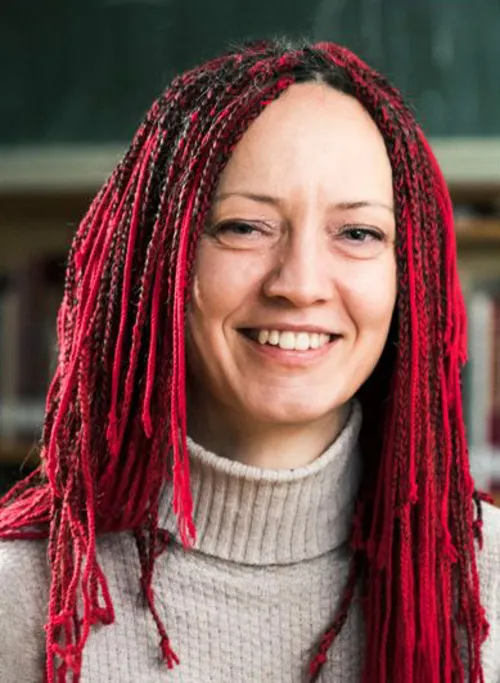
Inge Hinterwaldner holds a professorship for art history at the Karlsruhe Institute of Technology in Karlsruhe, Germany. In 2023-2024, she is Senior Fellow at Collegium Helveticum, Zurich. Her research focuses on interactivity and temporality in the arts, computer-based art and architecture, tectonics of programmed art, image and model theory, expressiveness of fluid dynamics, and the interdependence between the arts and the sciences since the 19th century. She is Principal Investigator of the research group Coded Secrets: Artistic Interventions Hidden in the Digital Fabric (2022-2027), dealing with net-based artworks from a variety of perspectives and disciplines: art, art history, computer science, media informatics, digital conservation, and visual cultural studies.
René G. Cepeda
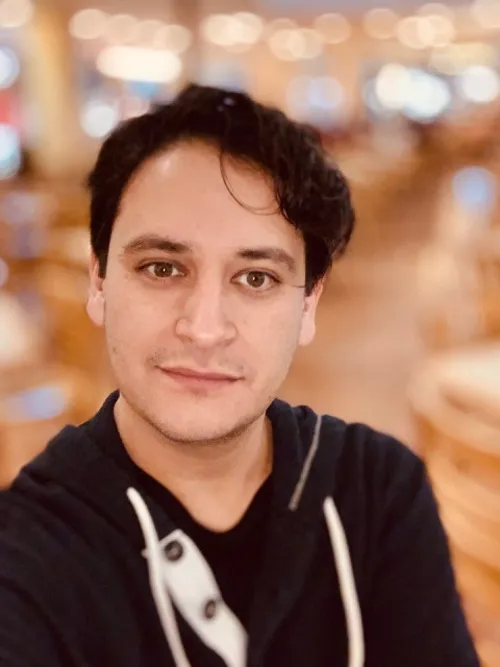
René G. Cepeda is a Mexican multidisciplinary designer/artist/art historian specializing in new media art. His studies include Information Design and software development, museum studies and art history master’s degrees in the UK, and a Ph.D. that combines design and curatorial practice to help curators engage with interactive new media art and create exhibitions that retain the meaning and interaction of such works. As a curator, he combines his artistic background including 5 years as an artist’s apprentice to create immersive and interactive exhibitions that combine formal curatorial practice with creativity in the design and implementation of spaces and objects to create exhibitions that can both entertain and educate audiences. His current research interests lie in the preservation and dissemination of new media art, particularly in the field of interactive art.
Charlotte Eifler
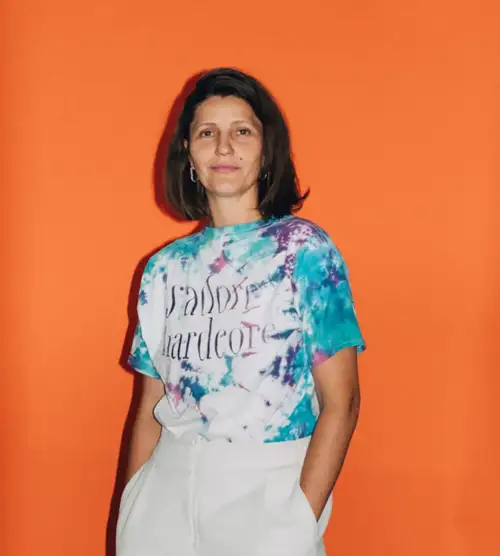
Charlotte Eifler is an artist and filmmaker who explores the politics of representation in relation to technology. Her works in the fields of moving image, extended reality, installation and performance address the intersections of digitality, archival practices and speculative futures. Eifler's projects utilise experimental storytelling techniques to question existing power structures and imagine alternative forms of history production and social coexistence. Her work has been shown internationally, including Sapporo International Art Japan, ACM Siggraph Digital Art, Los Angeles; Staatliche Kunsthalle Baden Baden, Art Basel, Haus der Kulturen der Welt Berlin, IMPAKT Utrecht, Kurzfilmtage Oberhausen, and RENCONTRES INTERNATIONAL Paris, among others.
Barbara Filser
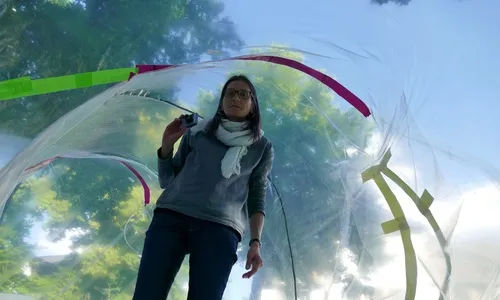
Barbara Filser is an art and media historian and has taught at various universities in Germany and Austria. She is currently based at the Institute for History of Art and Architecture at KIT – Karlsruhe Institute of Technology, Germany, and working on her research project CD-ROM Art: Exploring Images of the Digital Imaginary, funded by the German Research Foundation since 2023. Her other main areas of research are video art, documentary and essay film, and the history and theory of photography
Andrew Hoskins
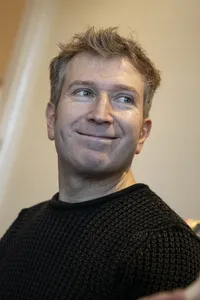
Andrew Hoskins is Interdisciplinary Professor at the University of Glasgow, UK. He has been researching the relationship between media, war and memory for over 20 years. He is founding Co Editor-in-Chief of the Cambridge Journal of Memory, Mind & Media, founding Editor-in-Chief of the Journal of Digital War, and founding Editor-in-Chief of the Journal of Memory Studies. He is author/editor of 10 books, including: Radical War: Data, Attention & Control in the Twenty-First Century (Hurst/OUP 2022, with Matthew Ford) and The Remaking of Memory in the Age of the Internet and Social Media (OUP 2024, co-edited with Qi Wang).
Gabriel Menotti
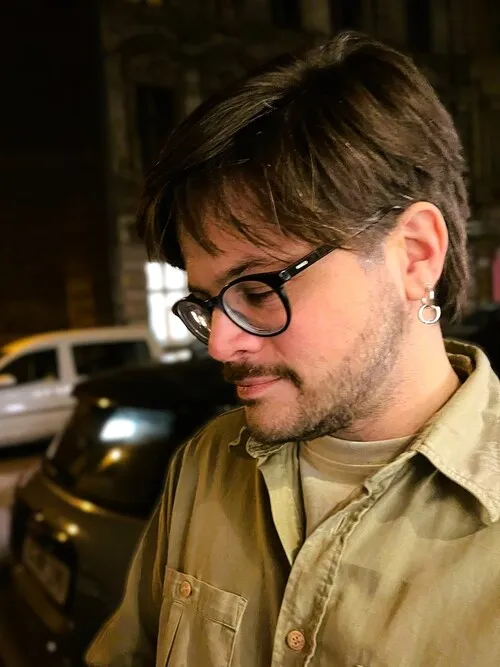
Gabriel Menotti is Associate Professor and chair of the Screen Cultures and Curatorial Studies program at Queen’s University. He works as an independent curator in the field of media practices and has written extensively on various themes related to image, institutions, and technology. His most recent publication is the historical anthology Barbarian Currents: Documents, Inventories and Ideas from Brazilian Media Arts (co-edited with German Nunez, forthcoming with Open Humanities Press). He also coordinates the Besides the Screen network.
Device Amnesia: Lecture Performance in Two Parts
Back toprogramm
In this lecture performance, artist Ofri Cnaani will present two segments from her ongoing Digital Afterness research project. The performance serves as a method to develop a lexicon that activates the space between theory, visual representation, and speculative writing. Leaking Lands (Part One) examines the catastrophic fire that destroyed two centuries of treasures at Brazil’s National Museum. The work investigates the residues of body, data, and matter left behind, forming an ecology of ‘leftovers’ that exists between eras and orders. Motivated by the notion of non-human testimonies, this piece aims to splice scientific and poetic knowledge to capture the post-fire transition from physical or biological form to the digital realm, through the perspective of six entities. Device Amnesia (Part Two) explores the island nation of Tuvalu’s journey toward becoming the “First Digital Nation” amidst the looming threat of climate change, using digital twin technology. The work explores the nation’s digital transition, through the lens of four technological devices, each representing a different techno-political affair, to ask how accumulated local knowledge could become intelligible and reproducible across contexts.
Friday, 24 October 19:00-21:00 h
HfG
Ofri Cnaani
Ofri Cnaani is an artist and researcher who works across performance and media. Cnaani’s work has been exhibited internationally at institutions such as the Metropolitan Museum, New York City; Venice Architecture Biennale; PS1 MoMA, New York City; Tate Britain, London; BMW Guggenheim Lab, New York City; Amos Rex Museum, Helsinki; Kunsthalle Wien, Vienna; and Kiasma Museum, Helsinki, among others. She holds a PhD from the Visual Cultures department at Goldsmiths, University of London, where she also served as an associate lecturer. Currently, she is a visiting scholar at the Institute of Visual Culture, TU Wien, and a research fellow at the Amsterdam School for Cultural Analysis (ASCA) at the University of Amsterdam.
What If...?
Back toprogramm
The workshop begins with a seemingly simple yet thought-provoking invitation: to interact with a printed postcard of an image used to train computer vision systems. However, this image is incomplete. A programming code called Decanonization has removed the part that microworkers—who routinely tag and organise datasets on platforms like Amazon Mechanical Turk—have identified as significant. By interacting with this altered image and through a joint discussion moderated by Nathalia Lavigne, this workshop will contribute to a broader project that Bruno Moreschi is currently developing in collaboration with programmers. Its focus is on how to train AI in ways that make its categories more flexible, ensuring that the concept of possibility is not constrained by the limitations of probability.
Sat, 26 Oct, 10 - 12 h
Pavilion
Bruno Moreschi
Bruno Moreschi is a researcher and artist. He holds a PhD in Arts from the State University of Campinas (Unicamp) with a period of study at Uniarts Helsinki. His investigations are related to the deconstruction of systems and the decoding of procedures and social practices in the fields of the arts, museums, visual culture and technology. Since 2023, he has been a fellow conducting research at LIAS – Leuphana University Institute for Advanced Studies. His projects have been recognised with grants and exhibitions, such as ZKM | Center for Art and Media, Karlsruhe, Van Abbemuseum, Eindhoven, Collegium Helveticum, Zurich, 33rd Bienal de Arte de São Paulo, Rumos Itau Cultural, Funarte, and the Bauhaus Fellowship.
Nathalia Lavigne
Nathalia Lavigne works as a researcher, curator and writer. Post-doctoral fellow at MAC USP (Museo de Arte Contemporáneo de la Universidad de São Paulo), she has a PhD from FAUUSP (Faculdade de Arquitetura e Urbanismo da Universidade de São Paulo), and a master's degree in Critical Theory and Cultural Studies from Birkbeck, University of London. Her research interests involve topics such as social documentation and circulation of images on social networks. As a curator, she has organised exhibitions such as Against, Again: Art Under Attack in Brazil, Anya and Andrew Shiva Gallery (John Jay College, CUNY, NYC, 2020), and Tactics of Disappearance, Paço das Artes (São Paulo, 2021). She is currently a junior fellow at the Käte Hamburger Kolleg: Cultures of Research (c:o/re) at RWTH Aachen University in Aachen.
Bestand 28028, KIT-ARCHIV & SE4-CSE-MEP-MDB
Back toprogramm
From 1956 to 2006, over a period of 50 years, about 210,000 negatives were produced by the image department of the Karlsruhe Nuclear Research Center. After the merger of the Research Centre and the University of Karlsruhe to form the Karlsruhe Institute of Technology, these negatives were taken over by the KIT archive and, as part of a project supported by the German Research Foundation (DFG), 10 percent of the material was selected, digitised, and made accessible between 2017 and 2022. Based on this example, a possible future practice of dealing with visual material in the KIT media database, which has grown to hold more than 300,000 assets today, will be considered in relation to today’s practice.
Sat, 26 Oct, 14 - 15 h
Useum (ZKM)
Jonas Zilius
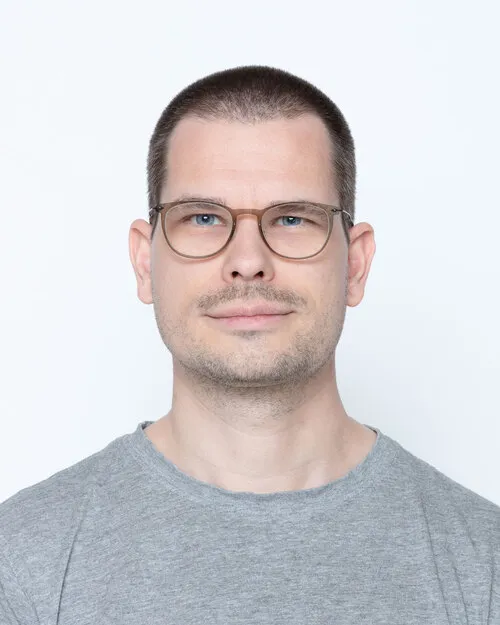
Jonas Zilius is head of the media database and department head of media production at the Karlsruhe Institute of Technology (KIT). After his diploma in architecture (KIT), he studied media art with a focus on artistic photography at the Karlsruhe University of Arts and Design (HfG), where he worked as a lecturer for “Bildproduktion” from 2017 to 2020 after his second degree. As a photographer, Jonas Zilius explores questions about objects and artefacts and their observation and reproduction, mostly based on long-term research in scientific and historical contexts. Despite its apparently documentary characteristic, his work transforms the material into more open forms of narration.
Speculative Networks: Reimagining Connections
Back toprogramm
Moderated by Nathalia Lavigne
The last roundtable, moderated by Nathalia Lavigne, brings together artistic and activist projects that imagine and put into practice other forms of connection. If there is no alternative to the current state of the internet controlled by private corporations and platforms, it is essential to devise a different understanding about networks and to apply the distributed intelligence developed for online environments in offline contexts, too. The four participants - Lori Emerson, Özge Çelikaslan, Kat Mustatea and Maryam Monalisa Gharavi - will talk about imaginary networks proposed since the late 19th century through the present moment, a collaborative archive sustained by a community of activists and researchers, and digital performances that discuss the idea of language as a network and how to deal with its disappearance.
Sat, 26 Oct, 15:30 - 17 h
Useum (ZKM)
Özge Çelikaslan
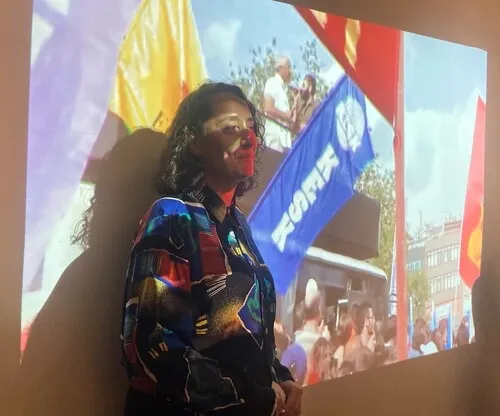
Özge Çelikaslan’s visual and scholarly work centres on counter-media narratives of social struggles, overlooked moving image artefacts and mapping archival gaps through orphan images. She completed her PhD at Braunschweig University of Arts, focusing on archives as commons, which led to her book Archiving the Commons: Looking through the Lens of bak.ma (2024). Her testimonial experimental videos and documentaries have been showcased across various platforms. As co-founder of the bak.ma digital media archive in 2014, she remains an active member. She teaches at Hochschule Mannheim Faculty of Design and is a research fellow at the Center for Arts, Design and Social Research.
Lori Emerson
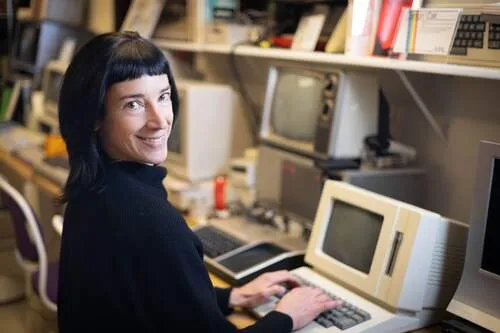
Lori Emerson is an Associate Professor of Media Studies and Director of the Intermedia Arts, Writing, and Performance Program at the University of Colorado Boulder. She is also Director of the Media Archaeology Lab. Emerson is author of the forthcoming Other Networks: A Radical Technology Sourcebook (Anthology Editions, early 2025), co-author of THE LAB BOOK: Situated Practices in Media Studies (University of Minnesota Press, 2021), author of Reading Writing Interfaces: From the Digital to the Bookbound (University of Minnesota Press June, 2014), and editor of numerous collections.
Maryam Monalisa Gharavi
Maryam Monalisa Gharavi is an artist, poet, and technologist. Her book Bio (Inventory Press, 2018) was the first to be written on a social media platform while bypassing “big data” storage sites. Other books include The Distancing Effect (BlazeVOX, 2016), Secret Catalan Poem (The Elephants, 2018), and the co-authored Oil News 1989-2020 (Sonic Acts Press, 2022). Exhibitions of her work include Sonic Acts, Amsterdam; Nottingham Contemporary, Nottingham; New Museum, New York City; Serpentine Cinema, London; Paço das Artes, São Paulo; and Recess, New York City, among others. She is the founder of Oil Research Group (ORG), a one-woman collective investigating oil and data. ORG was awarded an Anonymous Was a Woman Environmental Art Grant in 2023. She lives and works in New York City.
Kat Mustatea
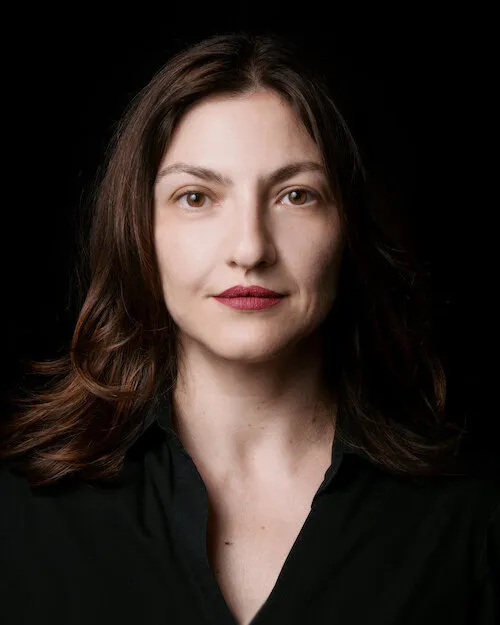
Kat Mustatea is a transmedia playwright and artist who experiments with language, live performance, and the computational uncanny to reconfigure what it means to be human in the digital age. Her hybrid digital artistic and literary project, Voidopolis (2023, The MIT Press / Leonardo), a first-of-its kind augmented reality book made to disappear, was shortlisted for the Lumen Prize and won the Arts and Letters ‘Unclassifiable’ Prize for Literature. Her work has been presented at Ars Electronica Linz, New Images Festival Paris, Stanley Picker Gallery London, Fabrica Treviso, CPH:DOX Copenhagen and New York Live Arts, among others.
TRANSIENT #6
Back toprogramm
Transients is a series of performances that simultaneously work with and against the possibility of a form of media-archaeological listening. They activate a historical object, the Subharchord II synthesiser built by the GDR in East Berlin in 1964. The piece listens to the ways in which its material-technical composition resonates in the present and, more specifically, how its filter design reappears as a constitutive component for the algorithm of the so-called “dialect recognition software,” a proprietary machine learning solution used in Germany since 2017 for cases of undocumented asylum seekers since 2017. Because we cannot listen to how this software listens, engaging with the filter in the Subharchord II allows for sonic and historical juxtapositions at the limits of history, offering a “para-genealogy” of machine listening and its connections with the building of a nation, its people, and, more importantly, its others.
Sat, 26 Oct, 19 - 22 h
HfG
Pedro Oliveira
Pedro Oliveira is a researcher and sound artist whose work is committed to an anticolonial study of listening and its material intersections with the violences of the European border. His work was exhibited and performed at the Akademie der Künste, Berlin; Send + Receive Festival, Winnipeg; CTM Festival, Berlin; Festival Novas Frequências, and Akademie Schloss Solitude, Stuttgart, among others. He held fellowships at the Leuphana Institute for Advanced Studies, the Helsinki Collegium for Advanced Studies, and taught at the Humboldt University Berlin and Heinrich-Heine University Düsseldorf. Currently he is a guest faculty in Sound Studies and Sonic Arts at the Universität der Künste Berlin.
In partnership with:

With support from: